If you keep a small business alive with grit, late nights, and big hopes, insurance is not just paperwork. It is the quiet backup plan that helps your work survive accidents, lawsuits, property loss, and surprise setbacks that can drain cash fast.
When people search for “3 small business insurance,” they usually want the three protections most owners compare first: general liability, commercial property, and workers’ compensation. Together, these cover everyday third-party risks, business assets, and employee injuries, making them highly relevant for retail shops, home-based businesses, online stores, and service companies that need smart protection without wasting budget.






Understanding 3 Small Business Insurance Basics
When people search for “3 small business insurance”, they usually want the three protections most likely to keep a small company from being financially blindsided. Think of it as a practical shortcut: start with the core trio, then expand only if your risks demand it.
For many small businesses, those three core areas are general liability, commercial property, and workers’ compensation. Together, they address common problems such as customer injuries, damaged equipment, and employee job-related accidents. This framework is not about buying everything at once; it is about understanding which basic shield protects which part of your operation before you compare options.
The Essential Three-Policy Starter Map
General liability insurance helps when your business is accused of causing bodily injury, property damage, or certain advertising-related harm. Commercial property insurance helps repair or replace buildings, tools, inventory, furniture, or equipment after covered events like fire or theft. Workers’ compensation insurance helps cover medical bills, lost wages, and employer liability when employees are hurt or become ill because of their work.
These protections matter across different business models, but the need shows up in different ways. The list below shows where the risks usually hit first.
- Retail businesses: need protection for slip-and-fall accidents, damaged stock, broken fixtures, and staff injuries during daily operations.
- Home-based businesses: often need coverage because standard homeowners insurance may not fully protect business equipment, client visits, or product-related claims.
- Online businesses: may still need liability and property coverage for inventory, shipped products, rented storage, and business equipment used at home or in a studio.
- Service-based businesses: benefit from protection when working on client premises, using tools on the job, or employing staff who face physical risk.
Each coverage area reduces a different kind of pressure point, and the table makes that easier to spot at a glance.
| Coverage Type | What It Covers | Best For | Common Exclusions |
|---|---|---|---|
| General Liability | Third-party injury, property damage, legal defense, some advertising injury | Retail, service, client-facing, product-selling businesses | Intentional harm, professional errors, employee injuries |
| Commercial Property | Buildings, inventory, tools, furniture, equipment after covered loss | Retail shops, home-based firms with equipment, online sellers with stock | Floods, earthquakes, wear and tear, some off-site losses |
| Workers’ Compensation | Employee medical care, rehab costs, lost wages, employer liability | Businesses with employees, especially hands-on operations | Independent contractors, non-work injuries, intentional misconduct |
Insurance language can feel dense, so here are the terms that matter most in plain English before you move any further.
- Premium: the amount you pay for the policy, usually monthly or yearly.
- Deductible: the amount you pay out of pocket before insurance starts paying on a covered loss.
- Policy limit: the maximum amount the insurer will pay for covered claims.
- Endorsement: an add-on or change that adjusts what the policy covers.
- Claim: a formal request you submit to the insurer after a covered event or loss.
Pro Tip: A low premium can look attractive, but a higher deductible or tighter exclusions may leave bigger gaps when you actually need help.
Pro Tip: If you work from home, sell online, or use contractors, never assume “small” means “simple”; even lean businesses can have real liability, property, and worker-related exposure.
The 3 Core Policies Most Small Businesses Compare
Small business insurance gets clearer when you start with the three policies owners compare most often. Each one protects a different kind of loss, and together they form the practical backbone of everyday coverage.
Think of these policies as protection for people, property, and payroll-related injury risk. General liability responds when your business causes bodily injury or property damage to others, commercial property helps repair or replace covered business assets, and workers’ compensation supports employees hurt while doing their jobs.
How These Policies Work in Real Operations
General liability is often the first policy a customer-facing company considers because accidents can happen fast, even in well-run spaces. Commercial property matters when your building, tools, stock, furniture, or equipment would be costly to replace after fire, theft, or certain weather events. Workers’ compensation becomes critical the moment you rely on staff, since a single on-the-job injury can create medical bills, wage replacement needs, and legal obligations.
Here is how those core policies usually compare in daily business life:
| Policy | Typical Incident | Approximate Cost Factors | When It Becomes Important |
|---|---|---|---|
| General Liability | Customer slips, product causes damage, contractor accidentally damages a client site | Industry risk, revenue, location, foot traffic, claim history | When you interact with customers, vendors, landlords, or the public |
| Commercial Property | Fire damages inventory, burst pipe ruins equipment, theft of tools or computers | Property value, construction type, security, location hazards, deductible | When replacing assets out of pocket would disrupt cash flow |
| Workers’ Compensation | Employee strains back lifting stock, falls from ladder, cuts hand using equipment | Payroll, job classification, state rules, claims history, safety record | When you hire employees or use labor with physical duties |
Claim scenarios make the differences easier to picture:
- General liability: A shopper trips over a loose floor mat and needs emergency treatment; the policy may help with medical costs and legal defense.
- General liability: A cleaner spills solution on a client’s expensive flooring; the policy may respond to third-party property damage.
- Commercial property: An overnight electrical fire destroys shelving, stock, and point-of-sale hardware; the policy may help replace covered items.
- Commercial property: A break-in leads to stolen laptops and damaged doors; the policy may cover repair and replacement, subject to limits.
- Workers’ compensation: A bakery employee burns an arm while unloading hot trays; the policy may cover treatment and part of lost wages.
- Workers’ compensation: A landscaping worker twists a knee on a job site; the policy may support rehab costs and required benefits.
Many insurers package general liability and commercial property into a business owner’s policy (BOP), which can be simpler and sometimes more cost-efficient than buying each policy separately. Bundled coverage may offer convenience and coordinated limits, while standalone policies can provide more customization for businesses with unusual property values, higher liability exposure, or landlord and contract requirements.
Pro Tip: Bundled coverage can look cheaper at first glance, but standalone policies may fit better if your equipment is specialized, your premises risk is high, or you need separate limit structures.
Some businesses also need broader protection beyond the core three. Optional add-ons often include cyber liability for data breaches and ransomware, professional liability for advice or service mistakes, business interruption for lost income after a covered shutdown, and commercial auto for vehicles used in deliveries, service calls, or transporting tools and goods.
The smartest comparison is not just price-to-price, but exposure-to-exposure. A retailer with inventory, a consultant storing client data, and a contractor driving between job sites can all start with the same three policy categories, yet their ideal protection expands in very different directions once real operating risks are mapped out.
Cost Drivers, Pricing Factors, and Budget Planning
Insurance pricing is rarely random; it is a mirror of how your business operates, what it owns, and how much risk it brings into the real world. When you understand the levers behind the quote, budgeting stops feeling like guesswork and starts feeling like strategy.
For small businesses, insurers usually calculate price by blending exposure, loss potential, and past performance. A bookkeeping studio, neighborhood cafe, and growing contractor may all buy coverage, but their premiums differ because the odds and cost of a claim differ. Industry class, payroll, location, revenue, property value, and claims history are among the most influential signals, and even small changes in them can shift the annual premium.
What Actually Moves the Quote
The biggest pricing driver is often what kind of work you do. Low-hazard professional services usually pay less than businesses with physical labor, public foot traffic, vehicles, heat, or specialized equipment. Payroll matters because it often reflects employee count and workers’ compensation exposure. Revenue can raise general liability pricing because more sales may mean more customers, more transactions, and more chances for something to go wrong. Location influences crime rates, weather exposure, legal climate, and rebuild costs. Property value shapes commercial property premiums because replacing inventory, furniture, tools, or equipment is expensive. Finally, claims history is your track record; repeated losses tell insurers that future losses may follow.
To turn these variables into a realistic budget, use a simple planning method before you request quotes.
- List your core exposures: customers on-site, employees, equipment, vehicles, inventory, and professional advice.
- Estimate annual payroll and revenue conservatively, using a startup case, expected case, and growth case.
- Calculate replacement value for business property rather than guessing what you originally paid.
- Check local risk conditions such as storm zones, theft patterns, and landlord insurance requirements.
- Review your loss history, even if it is minimal, and note any prior incidents or near-misses.
- Set a budget range by starting with a baseline quote target, then adding room for endorsements, taxes, and policy fees.
As a practical rule, a startup should budget for essentials first and protect cash flow with a clear deductible plan. A local shop should budget for foot traffic, inventory, signage, and property risks. A growing small company should expect premiums to rise with payroll, higher sales, new locations, and added equipment, then revisit limits before renewal instead of after a claim.
| Business Profile | Risk Level | Typical Cost Drivers | Savings Opportunities |
|---|---|---|---|
| Home-based consultant | Low | Professional liability exposure, modest revenue, minimal property | Bundle policies, review limits, pay annually |
| Neighborhood retail shop | Moderate | Customer foot traffic, inventory value, local theft/weather risk | Security systems, annual payments, accurate inventory reporting |
| Small contractor or trades business | High | Payroll, tools, vehicles, jobsite injuries, prior claims | Safety training, higher deductibles, fleet controls, bundled coverage |
You can reduce premiums responsibly without stripping out protection. The goal is not the cheapest policy on paper; it is the strongest value for the risk you actually carry.
- Implement safety programs such as training, maintenance logs, incident reporting, and workplace checklists.
- Choose higher deductibles only if your cash reserves can absorb them during a claim.
- Use policy bundling when the package improves price without hiding weak limits.
- Select annual payments when possible to avoid installment fees.
- Run accurate coverage reviews each year so you are not overinsuring payroll, revenue, or property values.
Pro Tip: Underreporting revenue or payroll may lower the quote today, but it can trigger audit bills, coverage disputes, or painful catch-up costs later.
Pro Tip: If your operations changed this year, update the insurer before renewal; proactive accuracy often protects both your premium and your credibility.
Smart budget planning means treating insurance as a living operating cost, not a fixed number. Revisit it whenever you hire, move, expand services, buy equipment, or sign bigger contracts, because each growth step can quietly reshape both risk and price.
How to Choose the Right Coverage for Different Business Models
The right policy is not the one with the longest checklist. It is the one that fits how your business actually earns, delivers, stores, ships, serves, or steps onto someone else’s property.
Insurance priorities shift fast when the business model changes. A freelancer may worry most about a client dispute, while a restaurant faces injuries, spoilage, and liquor-related claims. The smartest approach is to match how you operate with the losses most likely to interrupt revenue, trigger lawsuits, or violate contract requirements.
Risk Mapping by Revenue Engine
Start by sorting your business by its real-world exposure, not just its industry label. Ask where you work, what property you rely on, whether clients can sue over advice or performance, and whether contracts force specific limits. That process helps you separate essential coverage from optional add-ons that only inflate premiums.
| Business model | Top risks | Recommended policies | Useful endorsements |
|---|---|---|---|
| Freelancers | Client disputes, missed deadlines, laptop loss | Professional liability, general liability, business personal property | Cyber, hired/non-owned auto |
| Consultants | Advice errors, contract-based claims, data exposure | Professional liability, general liability, cyber liability | Contractual liability review, higher E&O limits |
| Ecommerce stores | Product claims, inventory loss, shipping interruptions, hacks | General liability, product liability, commercial property, cyber liability | Inland marine, business interruption, crime/fraud |
| Contractors | Jobsite injuries, property damage, tool theft, auto accidents | General liability, workers’ comp, commercial auto, inland marine | Additional insured, waiver of subrogation, equipment floaters |
| Restaurants | Slip-and-falls, fire, food spoilage, employee injuries | General liability, commercial property, workers’ comp, business interruption | Spoilage, equipment breakdown, liquor liability |
| Office-based firms | Visitor injuries, equipment loss, employment claims, outages | General liability, commercial property, cyber liability, EPLI | Business interruption, valuable papers, tenant improvements |
Before choosing limits, read the documents that can quietly dictate your insurance needs. A cheap policy that fails a lease or client contract can cost more than a stronger one that satisfies requirements on day one.
- Review client contracts for minimum limits, indemnity clauses, and wording like additional insured or primary and noncontributory.
- Check your lease for property responsibilities, glass, signage, build-out coverage, and required liability limits.
- Verify state rules for workers’ comp, commercial auto, professional licensing, and alcohol-related exposures where applicable.
- List your revenue-critical assets: equipment, inventory, data, key staff, and the number of days you could survive a shutdown.
- Compare those needs against policy exclusions, sublimits, waiting periods, and deductibles before you buy.
Pro Tip: If a contract requires coverage language you do not fully understand, ask your broker to map each requirement to a policy form before you sign.
Once you have a draft program, pressure-test it for imbalance. Underinsurance leaves painful gaps when growth outpaces old limits, while overinsurance drains cash into protection that does not match your true exposure.
Watch for these warning signs before locking in coverage:
- Your revenue, payroll, inventory, or equipment values increased, but policy limits stayed the same.
- You signed larger clients or moved into stricter leases without updating endorsements or certificates.
- Your business interruption coverage would not cover rent, payroll, and recovery time for a realistic shutdown.
- You are paying for coverage tied to operations you no longer perform, such as delivery, alcohol service, or owned vehicles.
- Your deductible is so high it weakens the policy’s practical value, or so low it unnecessarily raises premium.
- Your policy includes broad limits, but key exclusions remove the very losses most likely for your business model.
Buying, Comparing, and Reviewing Policies Effectively
The smartest policy is not always the cheapest one. A strong quote earns its value by protecting cash flow when a real problem hits, not by looking attractive on page one.
When comparing insurers, line up quotes side by side and read beyond the premium. Check whether each option matches the same coverage basis, then inspect limits, exclusions, waiting periods, deductibles, and the insurer’s reputation for claims handling. A lower monthly price can hide tighter sublimits, slower benefit triggers, or carve-outs that weaken protection exactly where your business is most exposed.
Quote-Decoding Playbook for Better Decisions
Start with an apples-to-apples review. If one insurer includes broader property protection, cyber add-ons, or business interruption terms while another strips them out, the prices are not truly comparable. Also verify financial strength ratings, complaint patterns, broker responsiveness, and how quickly certificates of insurance can be issued, because operational delays can cost sales, leases, or contracts.
| Comparison Factor | Why It Matters | What to Verify | Common Mistake |
|---|---|---|---|
| Coverage limits | Sets the maximum payout after a loss | Per claim, aggregate, and sublimits for equipment, data, or rented spaces | Comparing premiums without matching limits |
| Exclusions | Defines what the insurer will not pay for | Industry-specific exclusions, flood, employee theft, professional errors, or cyber events | Assuming “standard” means comprehensive |
| Deductibles | Affects out-of-pocket cost at claim time | Flat vs percentage deductibles and whether separate deductibles apply | Choosing a deductible that strains cash reserves |
| Waiting periods | Can delay business interruption or disability benefits | Number of days before benefits begin and any time-based conditions | Ignoring gaps during early downtime |
Use this checklist while reviewing policy documents so small wording differences do not become expensive surprises later.
- Confirm the legal business name, address, and operations description are correct.
- Match listed limits to the quote, proposal, and any lender or landlord requirements.
- Read all exclusions and endorsements, especially added forms that modify standard wording.
- Check deductibles, waiting periods, coinsurance clauses, and valuation method for property.
- Verify who is covered: owners, employees, temporary staff, contractors, and drivers if relevant.
- Review reporting deadlines for claims, incidents, payroll changes, and vehicle updates.
- Confirm additional insured, loss payee, and certificate requirements before signing contracts.
- Look for cancellation terms, renewal conditions, and payment schedule penalties.
Practical reminder: Read exclusions line by line, not just summaries. Also confirm that certificates of insurance reflect the actual policy wording, because a certificate is evidence of coverage, not a substitute for the contract itself.
Annual reviews work best as a simple trigger-based process rather than a rushed renewal habit. Revisit coverage immediately after hiring staff, moving locations, buying equipment, adding vehicles, or launching new services, because each change can alter payroll, liability exposure, replacement values, or territory risks.
- List every business change since the last renewal, including staffing, assets, contracts, and service scope.
- Gather updated payroll figures, revenue estimates, equipment values, lease terms, and vehicle details.
- Ask your insurer or broker which policies, endorsements, and limits should change right now.
- Request fresh quotes from at least two sources when exposure has materially changed.
- Review certificates, named insureds, and additional insured requests after updates are issued.
A disciplined review process keeps your policy aligned with reality. That alignment is where better buying decisions become stronger protection.
Claims, Documentation, and Risk Management Practices
Insurance proves its value in the moments that feel chaotic. A fast, organized response can protect cash flow, reduce downtime, and give your claim a far better chance of moving smoothly.
After any incident, act in a clear sequence: protect people first, prevent further damage if it is safe to do so, document what happened, notify your insurer promptly, and keep every related record in one place. Most policies expect timely notice, honest details, and proof of loss, so missed deadlines or incomplete files can slow payment or create disputes.
Turning a Loss Event Into a Clean, Credible Claim
Start with immediate control. Secure the area, call emergency services when needed, and separate damaged from undamaged property. Then create a claim file with dates, names, receipts, repair estimates, and notes from every conversation. Good documentation shows what happened, what was affected, and what you did to reduce additional loss.
Common claim documents often include photos or video of damage, purchase invoices, payroll records, police or fire reports, customer contracts, vendor agreements, maintenance logs, inventory lists, bank statements, shipping records, and prior correspondence. For liability or employee-related claims, incident reports, witness statements, medical documentation, and time records may also matter. Keep both digital copies and backed-up versions so nothing disappears when pressure rises.
Use this simple incident-response flow to keep actions practical and deadline-focused:
- Ensure safety and get urgent help.
- Document the scene before cleanup when possible.
- Notify the insurer, broker, or claims hotline immediately.
- Preserve damaged items, records, and communications.
- Track claim numbers, adjuster requests, and policy timelines.
Pro Tip: Never throw away damaged property too early unless it creates a hazard. Insurers may need to inspect it before approving replacement or reimbursement.
The table below works well on mobile and desktop because each column stays concise while covering the essentials.
| Incident Type | Immediate Action | Documents Needed | Follow-Up Step |
|---|---|---|---|
| Property damage | Secure site, stop further loss | Photos, invoices, inventory list, repair estimates | Schedule adjuster visit and track repairs |
| Customer injury | Get medical help, record details | Incident report, witness notes, video, contracts | Notify insurer and preserve communications |
| Theft or vandalism | Call police, protect premises | Police report, photos, receipts, stock records | Submit proof of loss by deadline |
| Cyber event | Contain access, alert IT support | System logs, screenshots, vendor reports, notices | Follow breach response and recovery steps |
Strong risk management does more than prevent disruption; it can also support better insurability and more favorable underwriting results. Focus on habits that reduce claim frequency and make your business look disciplined, not reactive.
- Workplace: keep walkways clear, post procedures, inspect equipment, and document housekeeping checks.
- Property: maintain roofs, alarms, sprinklers, locks, lighting, and backup power; update inventory records regularly.
- Digital: use multifactor authentication, software patching, role-based access, encrypted backups, and phishing drills.
- Employee safety: train for lifting, driving, emergency response, reporting protocols, and return-to-work procedures.
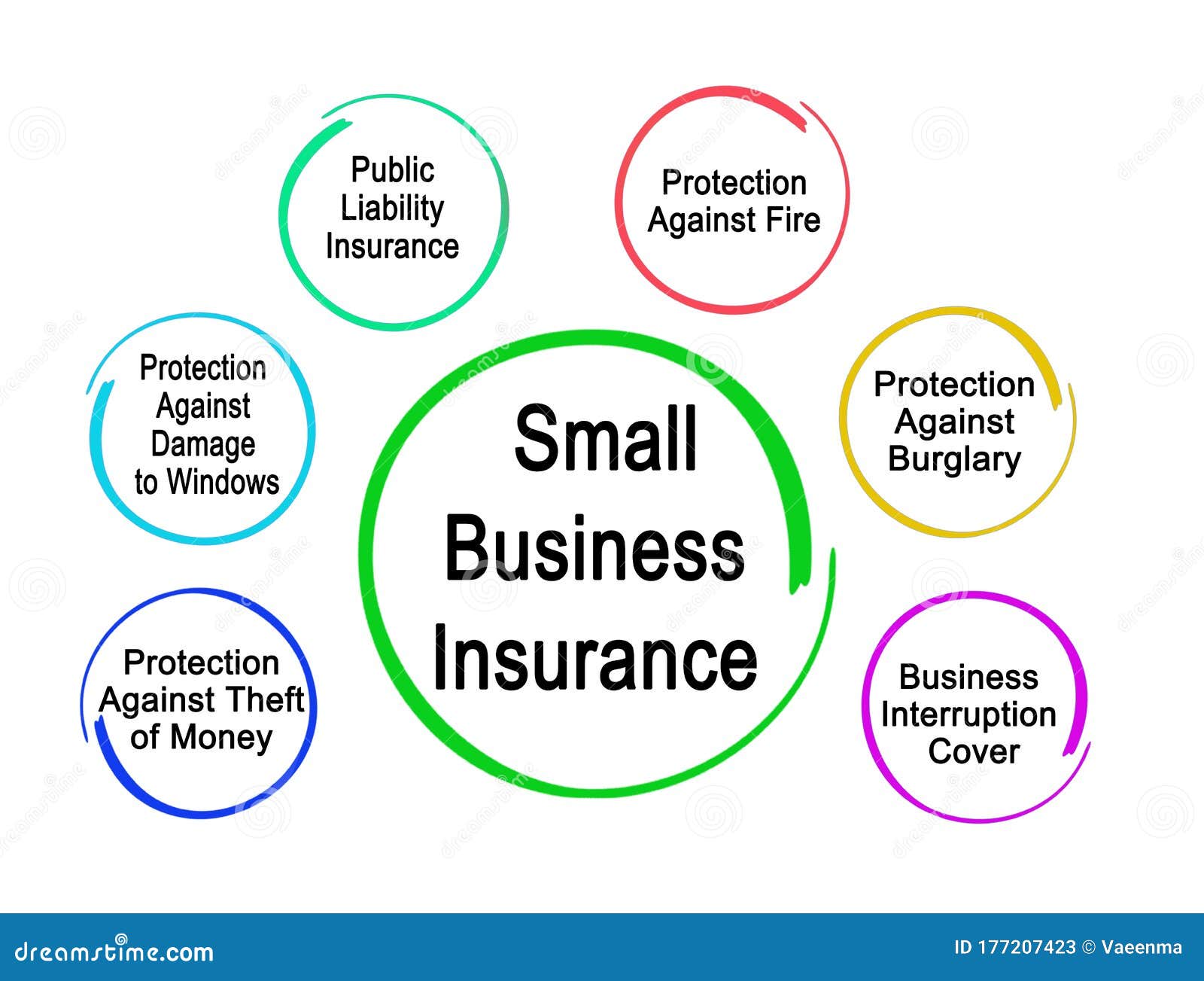
Illustration concept: picture a bright cutaway scene of a small business street with three stacked protective layers. The bottom layer shows property protection: a storefront, storage room, and delivery van wrapped by shield icons, smoke detectors, locks, and a water-drop barrier against fire, theft, and burst pipes. The middle layer shows liability protection: customers, packages, and a handshake near warning signs, legal document icons, and a safety cone representing injuries, disputes, and third-party damage. The top layer shows digital and people protection: laptops, cloud symbols, employee badges, and a glowing firewall around payroll data, contracts, and staff wellbeing, with risk icons for hacking, wage interruption, and workplace incidents.
Final Thoughts
The best insurance choice is not the biggest policy. It is the one that matches how your business actually earns, serves, stores, hires, and grows. Compare limits, exclusions, deductibles, endorsements, and claim support carefully, then review coverage every year so your protection evolves as confidently as your business does.
Frequently Asked Questions
What does “3 small business insurance” usually mean?
It usually refers to the three core policies many owners review first: general liability, commercial property, and workers’ compensation.
Who commonly needs these policies?
Retail stores, home-based businesses, ecommerce sellers, consultants, contractors, and local service companies often need at least one or more of them.
What does general liability insurance cover?
It commonly helps with third-party bodily injury, property damage, and some legal defense costs, but it often excludes professional mistakes and intentional acts.
What is commercial property insurance best for?
It protects owned business property such as equipment, inventory, furniture, and sometimes improvements after covered events like fire or theft.
Why is workers’ compensation important?
It helps cover employee job-related injuries or illnesses and is required by law in many states once a business has staff.
What do premium, deductible, and policy limit mean?
Premium is the cost you pay for coverage, deductible is the amount you pay before insurance contributes, and policy limit is the maximum the insurer pays for a covered claim.
How can a small business lower insurance costs responsibly?
Use safety programs, bundle policies, choose a higher deductible if affordable, pay annually when possible, and review coverage regularly to avoid paying for the wrong limits.